Gifu Travel Guide - Japan Travel Sights
Gifu 岐阜県 is the part of central Japan most people reach for when they want old wooden streets, mountains and hot springs without going far from the Tokyo–Kyoto corridor. Almost everything visitors come for sits in the northern half of the prefecture: Takayama 高山, Shirakawa-go 白川郷 and Gero Onsen 下呂温泉. This guide brings together everything we have written about the area, so you can work out where to go, how long you need, and how to move between places. Information on this page is current as of October 2026.
What most people get wrong about Gifu
Three things cause trouble again and again.
It is not a day trip from Tokyo. Takayama is roughly two and a half hours from Nagoya by limited express — and Nagoya is itself a bullet-train ride from Tokyo or Kyoto. Treat Gifu as two nights minimum. One night is possible only if you arrive early and accept that you will see Takayama and nothing else.
Shirakawa-go is a separate trip from Takayama. The two are not walking distance or a quick hop; they are connected by a bus that takes about 50 minutes each way. Plan a half day for Shirakawa-go, not an hour.
Takayama is a morning town. The morning markets, the old merchant houses and the museums all run on daytime hours, and the old quarter empties out after about 17:00. Build your day around the morning, not the evening.

Getting there and getting around
There is no airport in the Hida 飛騨 region itself. The Takayama tourism association’s own access page points visitors at three airports: Chubu Centrair International Airport 中部国際空港 near Nagoya, Toyama Kitokito Airport 富山きときと空港, and Shinshu-Matsumoto Airport 信州まつもと空港. For most international visitors, that means flying into Nagoya (or Tokyo/Osaka) and continuing by train.
| Route | How | Time / fare |
|---|---|---|
| Nagoya 名古屋 → Takayama | JR Limited Express Hida 特急ひだ | About 2 hours 30 minutes |
| Nagoya → Takayama | Highway bus | About 2 hours 45 minutes |
| Takayama → Shirakawa-go | Nohi Bus 濃飛バス | About 50 minutes, 2,800 JPY one way |
| Takayama → Kanazawa 金沢 | Nohi Bus | 4,200 JPY one way |
| Takayama → Toyama 富山 | Nohi Bus | 3,800 JPY one way |
| Takayama → Takaoka 高岡 / Shin-Takaoka 新高岡 | Nohi Bus | 3,300 JPY one way |
Do you need to reserve the Shirakawa-go bus? Some departures on the Takayama–Shirakawa-go–Kanazawa/Toyama corridor are reservation-only and some are not, and which is which changes with the timetable. Nohi Bus takes reservations online and by phone. Check the specific departure you want before you travel — turning up for a reservation-only bus without a seat is the most common way visitors lose half a day here.
Do you need a rental car? For Takayama, Shirakawa-go and Gero, no. All three are on the train or the bus network, and Takayama’s old town is walkable from the station. A car becomes worth it only if you are heading for the Hirugano 蛭ヶ野 plateau, Gujo Hachiman 郡上八幡, Nakatsugawa 中津川 or the Mino 美濃 side of the prefecture, where services are thin. Note that winter driving in the Hida mountains means snow tires and mountain passes.
Start with our full access articles: Complete Guide to Accessing Hida Takayama and Complete Guide to Accessing Gero Onsen. For the Shirakawa-go leg in particular — which departures need a reservation, what fits in the hold and why winter delays are normal — see Takayama to Shirakawa-go by Bus.
When to go
Gifu has a real four-season climate, and the mountains make the extremes sharper than on the coast.
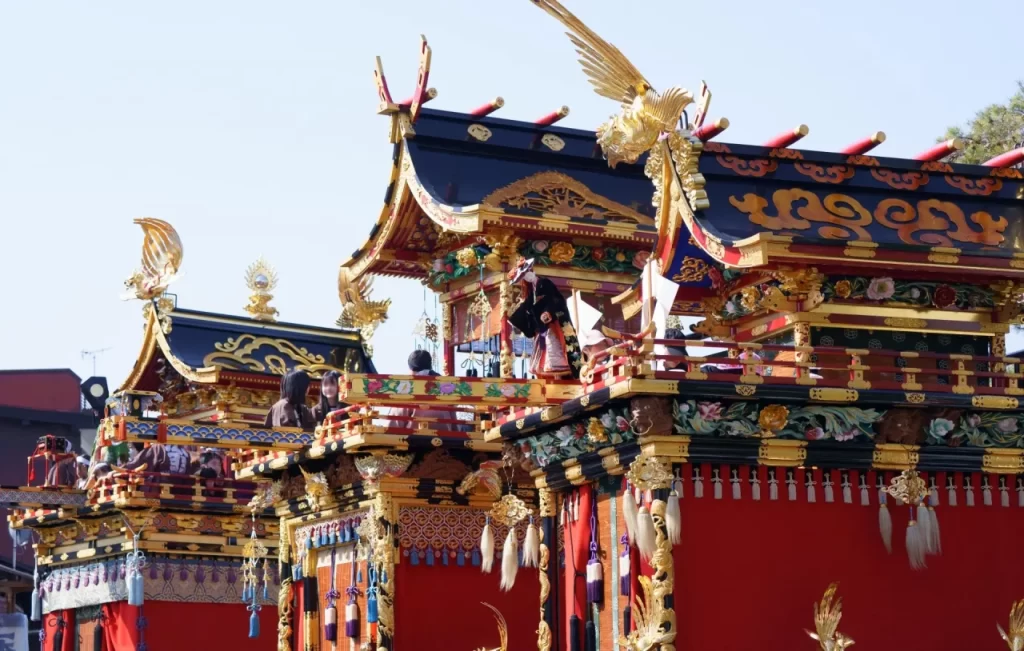
- Spring (April–May). The Spring Takayama Festival (Sanno Matsuri 山王祭, the annual festival of Hie Shrine 日枝神社) is held on 14 and 15 April every year. Accommodation in Takayama books out well ahead for those two nights.
- Summer (June–August). Warm and green, with a rainy spell in June. The best season for the Hirugano plateau and for river valleys.
- Autumn (October–November). The Autumn Takayama Festival (Hachiman Matsuri 八幡祭, the annual festival of Sakurayama Hachimangu 櫻山八幡宮) is held on 9 and 10 October every year. Fall foliage follows through late October and November, earlier at altitude.
- Winter (December–March). Snow, thatched roofs under white, and hot springs at their best. This is also when bus timetables thin out and mountain roads close, so check services rather than assuming.
For the detail: Takayama Festival – One of Japan’s Three Most Beautiful Festivals, When is the Autumn Takayama Festival? Schedule, highlights and access, Walking Through Hida-Takayama in Autumn – 7 fall foliage spots, and When Does It Snow in Hida Takayama? A Guide to Takayama’s Climate.
What to see
In and around Takayama
- Sanmachi Street 三町 – the old merchant quarter
- Takayama Jinya 高山陣屋 – the surviving Edo-period government house
- Takayama Morning Market 高山の朝市 – one of Japan’s three great morning markets
- Hida Folk Village 飛騨の里 – relocated farmhouses in an open-air museum
- Hida Takayama Museum of Art 飛騨高山美術館 – Art Deco and Art Nouveau glass
Elsewhere in Gifu
- Shirakawa-go 白川郷 – 8 spots in the thatched-roof village
- Shirakawa-go winter light-up 白川郷ライトアップ – the 2027 dates, and how the reservation-only evenings work
- Hida City 飛騨市 – 6 spots from the film Your Name 君の名は。
- Gifu’s historic sights – landmarks and the figures behind them
Hot springs
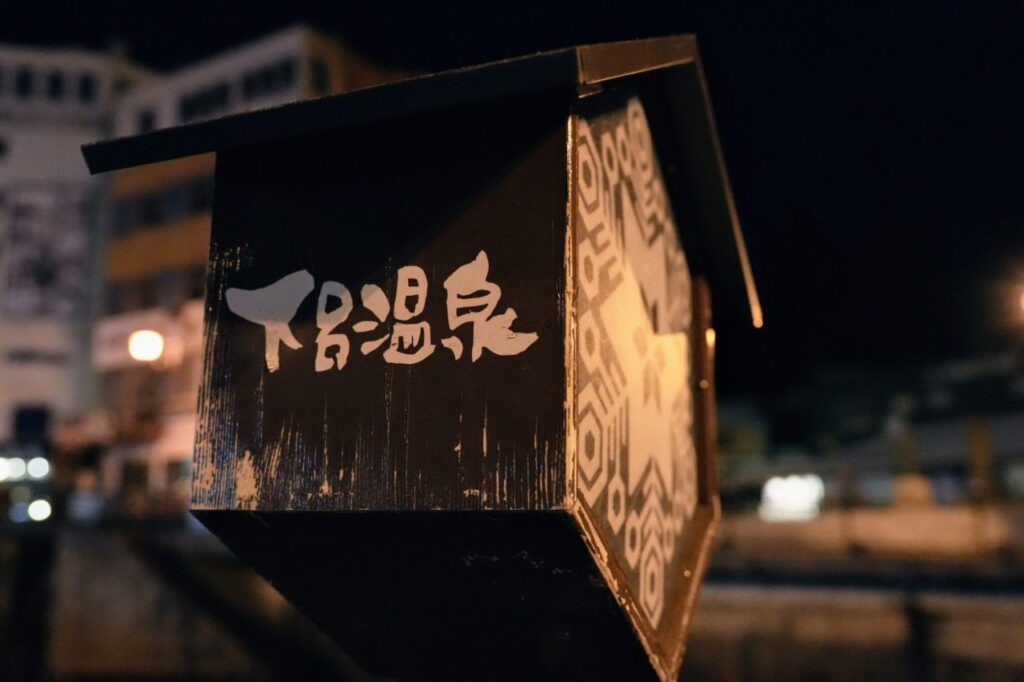
Gero Onsen is counted among Japan’s three famous hot springs, and it sits on the same Takayama Main Line 高山本線 that runs between Nagoya and Takayama — which makes it easy to add as a night on the way in or out rather than a separate journey.
- Gero Onsen 下呂温泉 – Japan’s famous hot spring known for its silky water
- Gero Onsen Yumeguri Tegata 湯めぐり手形 – the all-access bathing pass
- Best day-use hot springs around Hida Takayama – 6 onsen
- Onsen spots in Hida Takayama for a relaxing getaway
Before your first bath, check the house rules on tattoos and on private baths with the inn directly. Policies differ between properties and are not always stated in English.
What to eat
- Hida Beef 飛騨牛 – Gifu’s premium wagyu
- 5 yakiniku restaurants in Hida Takayama for A5 Hida beef
- Takayama Ramen 高山ラーメン – a guide to local favorites
- Takayama street food – 7 things to try
- Hoba Miso 朴葉味噌 – miso grilled on a magnolia leaf
- Kei-chan けいちゃん – Gifu’s marinated chicken dish
- Sarubobo さるぼぼ – the lucky charm to take home
Many smaller places in the old town are cash-only and close in the afternoon. Draw cash at a convenience-store ATM before you start the day.
Where to stay
Hida-Takayama
- Ryokan Asunaro 旅館あすなろ – classic architecture and regional cooking
- Oyado Koto no Yume お宿 古都の夢
- Hyakunen Kominka Irori Yado Hidaya 飛騨屋 – a 100-year farmhouse with a hearth
- Makotoya Tenman and Makotoya Daishin – private vacation rentals
Elsewhere in Gifu
- Kaiseki Inn Suihoen 水鳳園 – Gero Onsen
- Yoshidaya Ryokan 吉田屋旅館 – Gujo Hachiman 郡上八幡
- Ryokan Ichikawa – Oi-juku 大井宿 on the Nakasendo 中山道
- Yamagami Onsen Yunomotokan 湯之元館 – Toki 土岐
- Ork Hirugano – an outdoor resort on the Hirugano plateau
- MORINOSORA – forest glamping in Nakatsugawa 中津川
Ryokan in this region typically serve dinner at a set time and expect you to be in the building for it. Tell the inn in advance if you have dietary restrictions, and ask whether they can handle them — many small inns cannot change a set kaiseki menu at short notice. More options across Japan are in our Where to Stay in Japan guide.
Combine Gifu with
Takayama sits between Nagoya and the Hokuriku coast, so the natural onward moves are Kanazawa, Toyama or back down to Nagoya. In winter, the same mountains put you within reach of the Nagano snow country — see our Ski & Snow in Japan guide. If you are building a wider temple-and-shrine itinerary, Nara pairs well with a Kyoto or Osaka leg, and Okinawa works as a warm-weather contrast at the end of a trip. The bus over the mountains also reaches Kanazawa on the Japan Sea coast; further afield, Osaka, Kyushu and Hokkaido each need a block of days rather than a stop. On the way west, Hiroshima and Miyajima sit on the Sanyo Shinkansen. Heading back towards Tokyo, Hakone breaks the journey with a hot spring and, on a clear day, a view of Mount Fuji 富士山.
Last updated: October 2026. Fares, times and opening hours change — please confirm with the operator or venue before you travel.