Nara Travel Guide - Japan Travel Sights
Nara 奈良 was Japan’s capital before Kyoto, and the buildings from that period are still standing — which is why a city most visitors give three hours to deserves a full day, and rewards two. The other thing to know is that the main sights are unusually close together: the Great Buddha, the deer park and the lantern-lined approach to Kasuga Taisha are all within one walkable area. This guide covers how to plan the day, when to come, and everything we have written about the city and the prefecture. Information on this page is current as of October 2026.
How much time do you need?
Most visitors arrive from Kyoto or Osaka in the late morning and leave before dark, and that is the main reason Nara gets described as a half-day stop. Here is a more realistic shape:
- Half a day (3–4 hours). Nara Park and Todai-ji only. You will be moving the whole time.
- One full day. Nara Park, Todai-ji, Kasuga Taisha and the old merchant streets of Naramachi ならまち. This is the sensible minimum.
- Two days, staying overnight. Adds the Nishinokyo 西ノ京 temples and the Heijo Palace site, and gives you the park early in the morning before the day trippers arrive — which is when it is at its best.
One practical warning: the main halls close earlier than you expect. Todai-ji’s Great Buddha Hall closes at 17:30 from April to October and at 17:00 from November to March. Plan the temples for the morning and the streets for the afternoon, not the other way round.
Getting there and getting around
Nara has no airport of its own. The gateways are Kansai International Airport 関西国際空港 (KIX) for international arrivals and Osaka International (Itami) Airport 大阪国際空港 (ITM) for domestic flights. From either, you travel on by train.
Two separate railways serve the city, and this trips people up constantly:
- Kintetsu Nara Station 近鉄奈良駅 is the closer of the two. It is a walk of a few minutes to the edge of Nara Park. Kintetsu 近鉄 is a private railway running from Osaka and Kyoto.
- JR Nara Station JR奈良駅 is further west, roughly a 20-minute walk or a short bus ride from the park. This is the station a Japan Rail Pass covers.
If you hold a rail pass, check which railway it covers before you buy a ticket — Kintetsu is a private company and is not included in JR passes. Which trains and lines any particular pass covers changes, so confirm with the railway company itself rather than with a third-party summary.
Do you need a rental car? No, and we would advise against it for the city. Nara Park, Todai-ji, Kasuga Taisha and Naramachi are a connected walk, and city buses cover the rest. Parking near the park is limited and fills early on weekends and during the autumn leaves. A car only makes sense if you are heading deep into the southern half of the prefecture.
What it costs to get in
| Site | Admission | Hours |
|---|---|---|
| Nara Park 奈良公園 | Free to enter | Open space, no gate |
| Todai-ji Daibutsuden 東大寺大仏殿 | 800 JPY adults and junior/senior high students; 400 JPY elementary students | 07:30–17:30 (April–October); 08:00–17:00 (November–March) |
| Kasuga Taisha 春日大社 — special admission to the inner sanctuary 御本殿特別参拝 | 700 JPY | Reception 09:00–16:00 |
| Kasuga Taisha Museum 春日大社国宝殿 | 700 JPY general; 400 JPY university and high school students; 300 JPY elementary and junior high students | 10:00–17:00, last entry 16:30 |
Note that the grounds of Kasuga Taisha are free to walk through; the 700 JPY applies to the special admission inside the cloister, which is a separate thing from the museum.
What to see
The core of a first visit
- Todai-ji Temple 東大寺 – a complete guide for visitors
- Nara Park 奈良公園 – a guide to the historical and scenic grounds
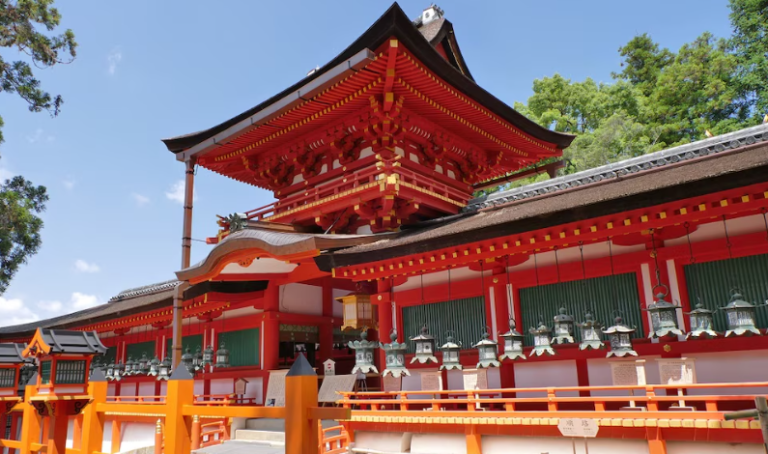
- Kasuga Taisha 春日大社 – Nara’s premier spiritual site
If you have a second day
- Yakushiji Temple 薬師寺 – 1,300 years of history in Nishinokyo
- Toshodai-ji 唐招提寺 – five must-see spots
- Gango-ji 元興寺 – the temple at the heart of Naramachi
- Heijo Palace Ruins 平城宮跡 – the site of the ancient capital
- Yoshimizu Shrine 吉水神社
About the deer
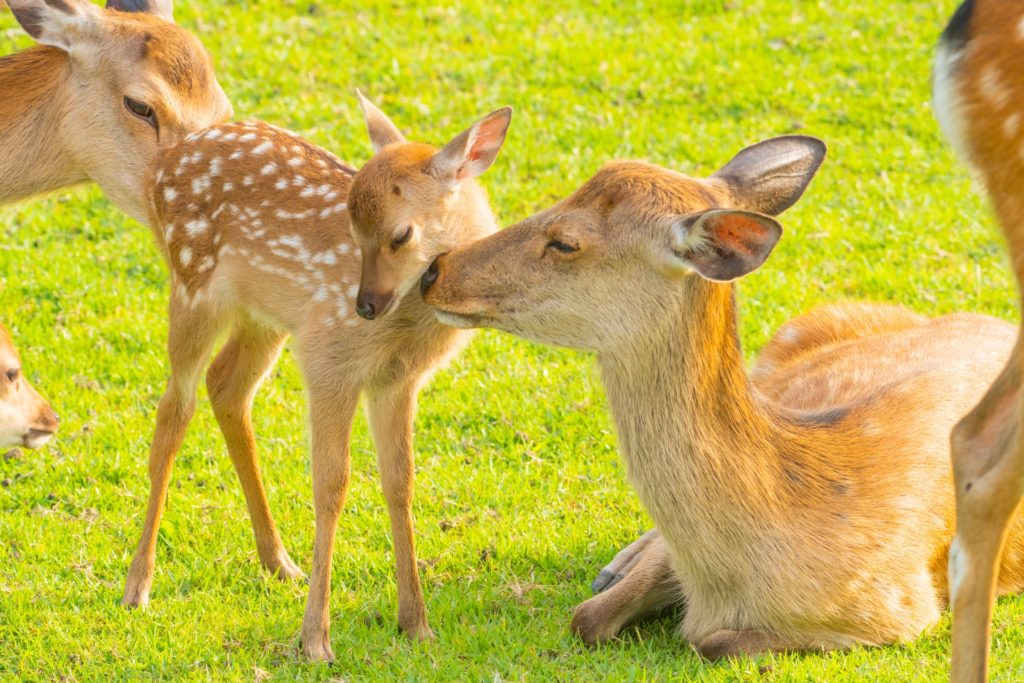
The deer in Nara Park are wild animals that are used to people, not tame ones. They will approach you, and they will push if they think you have food. The crackers sold by vendors in the park (shika senbei 鹿せんべい) are the only thing you should feed them. Keep paper maps and tickets out of reach — they get eaten — and do not tease an animal by holding food up, which is how most of the bumps and nips happen. Children are at head height with the deer, so keep them close.

When to go
- Spring (late March–April). Cherry blossom, and the park is at its busiest on weekends. Come on a weekday if you can.
- Summer (June–August). Hot and humid in the Nara basin, with little shade on the walk between sites. Start early and carry water.
- Autumn (late October–early December). Our pick. Clear air, autumn colour across the park, and the most comfortable walking weather of the year.
- Winter (December–February). Cold but quiet, and the temples are at their most atmospheric. Remember the shorter opening hours from November through March.
Before you go
- Wear shoes you can take off. Several halls require it, and you will be doing it repeatedly.
- Carry cash. Admission at temples and shrines is usually cash only, as are the deer crackers. Convenience-store ATMs near both stations are the easiest source.
- Use a coin locker at the station. Carrying a suitcase around the park is miserable; lockers at Kintetsu Nara and JR Nara save the day.
- Check the shrine calendar. Kasuga Taisha restricts access on major ritual days, including during the Kasuga Festival in March, when the inner area is closed for part of the day.
- Photography. Inside halls it is often restricted. Look for the signage rather than assuming.
Combine Nara with
Nara sits between Kyoto and Osaka, which makes it a natural second or third stop on a Kansai 関西 leg rather than a destination you fly into. From there, the mountains of Gifu are reachable via Nagoya for old streets and hot springs; Okinawa works as a warm-weather block at either end of a trip; and in winter the snow regions in our Ski & Snow in Japan guide, many of them in Nagano, are within reach by shinkansen. For choosing between a ryokan, a guesthouse and a hotel here, see Where to Stay in Japan. Kyoto is the obvious partner on the same Kansai leg, and travelling on towards Tokyo, Hakone and Mount Fuji are the usual places to break the journey. Osaka completes the Kansai triangle, and further out lie Kanazawa, Kyushu and Hokkaido. Further west on the Sanyo Shinkansen, Hiroshima and Miyajima are a day each.
Last updated: October 2026. Admission prices and opening hours change, and shrine access varies on ritual days — please confirm with the temple or shrine before you travel.