

- 2024-11-23
Discover the Historical Beauty of Hida Folk Village in Takayama, Japan
Hida Folk Village, or Hida no Sato, is a fascinating open-ai……
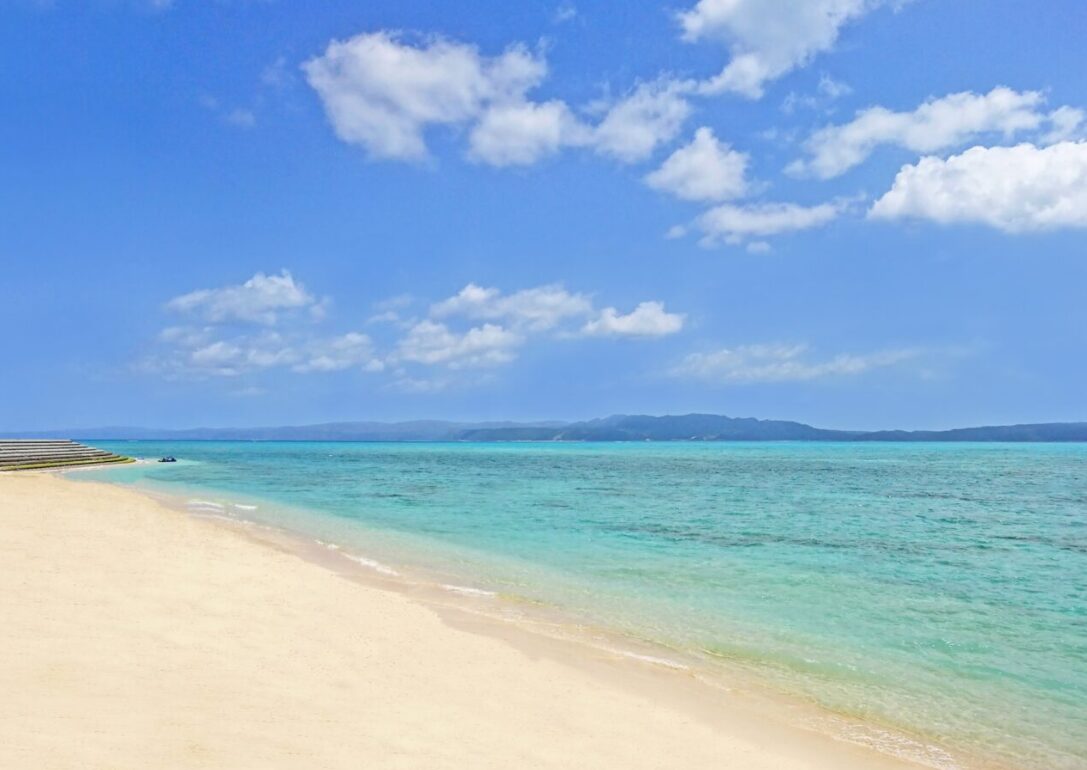
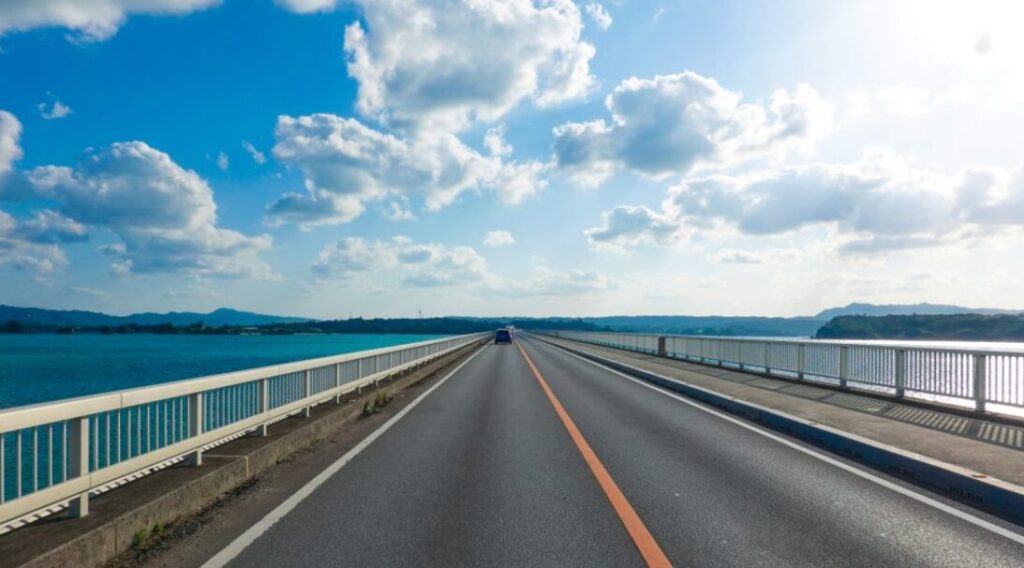
Kouri Island (古宇利島) is the rare Okinawan island you reach without a boat. A bridge of 1,960 metres runs out from Yagaji Island to Kouri, free to cross, and the drive over shallow turquoise water is the reason half the cars on it are rentals.
The island is small — a loop road, a handful of beaches, one tower and a scattering of cafés. This guide covers how to get there, where to leave the car, what each beach actually offers, and the safety point that matters more than any of it.
| Getting there | By car across the Kouri Bridge(古宇利大橋); no toll, and no practical bus service |
| Bridge length | 1,960 metres, from Yagaji Island in Nago to Kouri in Nakijin Village |
| Free parking | Sorahashi(古宇利島の駅ソラハシ), 106 ordinary spaces across two car parks |
| Sorahashi hours | 11:00–19:00, food court until 17:00; tourist information and cycle hire on site |
| Beach car parks | Paid, with the charge posted at the entrance; busiest in the morning in summer |
| Lifeguards | Not on duty year-round — the prefecture’s tourism service asks visitors not to swim when none are present |
| Kouri Ocean Tower | 1,000 JPY from 16, 500 JPY for 6–15, free under 6; 10:00–18:00, last entry 17:30 |
| Island size | About 8 km around — an hour by bicycle, less by car |
You drive. From Naha the route runs north on the expressway, out at Kyoda, up Route 58 and across to Yagaji Island, then over the Kouri Bridge; allow the best part of a morning rather than an hour. Buses reach Nakijin village but not usefully onto the island itself, so a rental car or a tour is the practical answer. Our guide to Kouri Island covers the island’s legends and the rest of what is on it.
The bridge itself is the first attraction. There is a car park at each end, and the walk out along the span is open to anyone — which is the better way to see the water than through a windscreen.
This is the practical question on Kouri, because the island is small and everyone arrives at once. The straightforward option is Sorahashi(古宇利島の駅ソラハシ), the island’s visitor facility: two car parks with 31 and 75 ordinary spaces, plus coach bays, and parking is free. It opens at 11:00 and closes at 19:00, with the food court finishing at 17:00, and it has a tourist information desk and bicycle hire.
The car parks at the individual beaches are private and charge by the visit, with the rate displayed at the entrance — expect to pay a few hundred yen and to find them full by late morning in July and August. Arriving before ten, or after three, makes the difference between parking at the beach and parking a walk away.
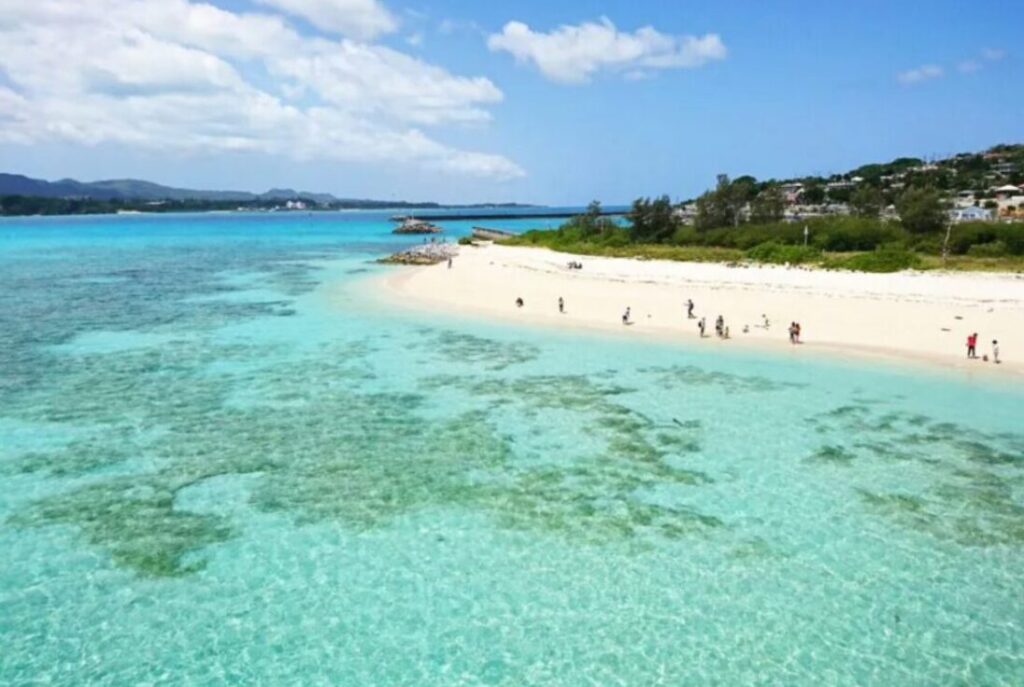
Kouri Beach, immediately beside the bridge, is the developed one: showers, toilets, shops and food within a short walk, and the easiest for families. It is also the busiest.
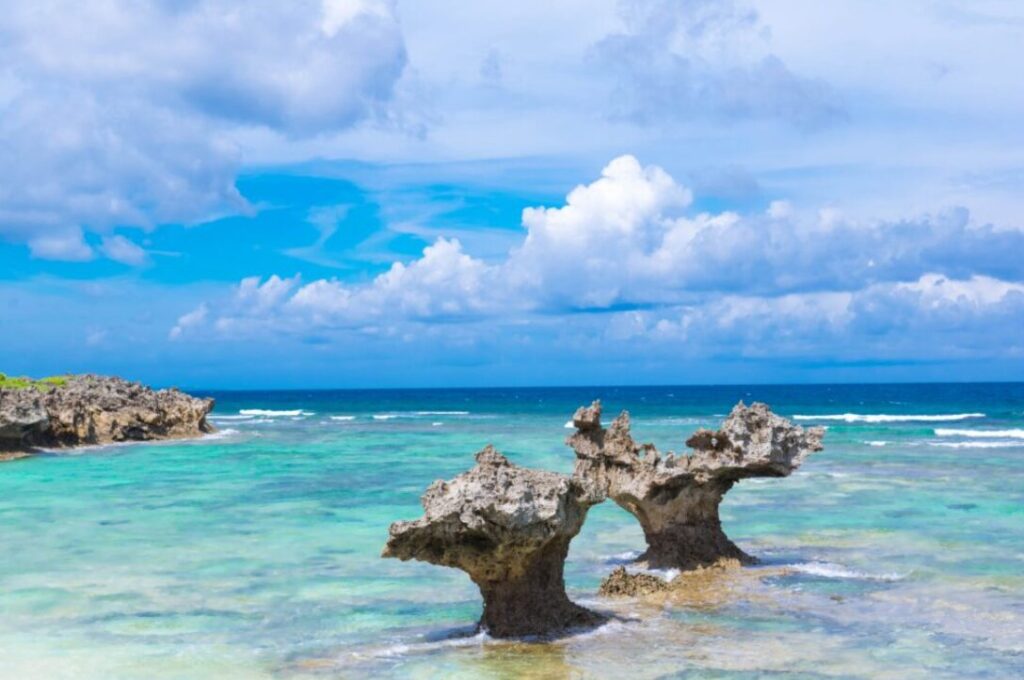
Tinu Beach(ティーヌ浜)is the one with the Heart Rock, the pair of eroded stacks that frame into a heart from the right angle. The path down and the car park above it are made up, and there is usually something to buy at the top. It is a photograph rather than a swimming beach, and the rock looks best at low tide.
Tokei Beach(トケイ浜), on the north coast, is a cove of rock pools and a pot-holed shelf; swimming works outside low tide. Chigunu Beach(チグヌ浜)is the small local beach below the village, tied to the island’s creation legend. Peace Beach is quieter again. None of these have the facilities of the main beach — bring water and take your rubbish away.
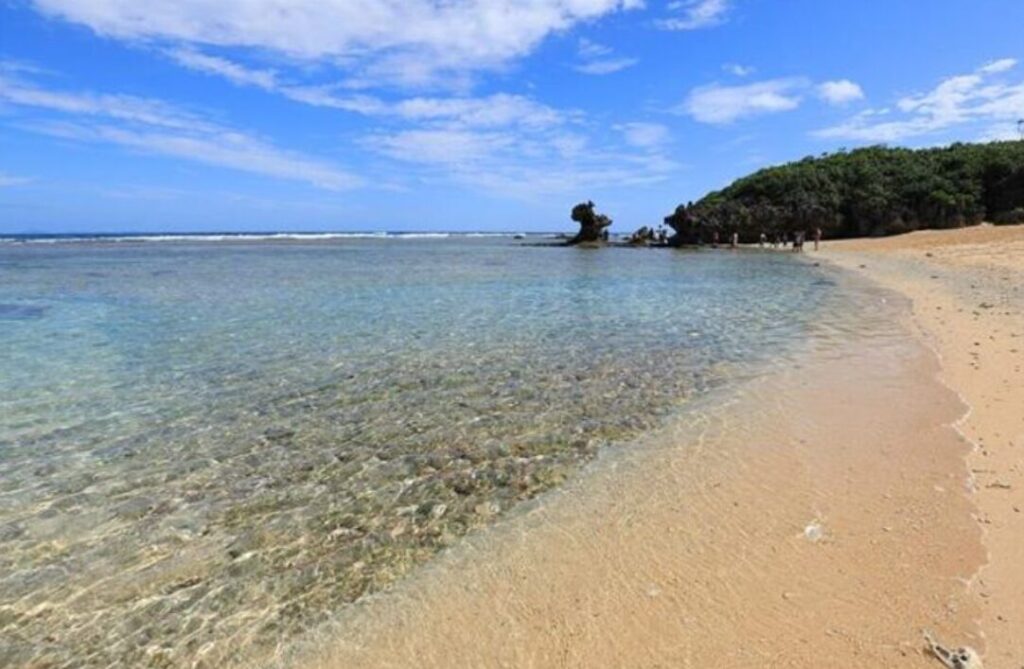
Kouri’s beaches are not managed resort beaches. Okinawa’s official tourism service states plainly that visitors should refrain from swimming when no lifeguard is on duty, and asks them to check conditions locally — including whether a jellyfish net is in place.
In practice that means: swim at the main beach during the season when it is supervised, treat the small coves as places to paddle and look rather than to swim out from, and take the tide seriously. Several of the coves change completely between high and low water, and some of the sand only appears once the tide has dropped.
The wider season runs from spring to autumn, with typhoons the main disruption between July and October. Winter is cool for swimming but excellent for the drive and the view.
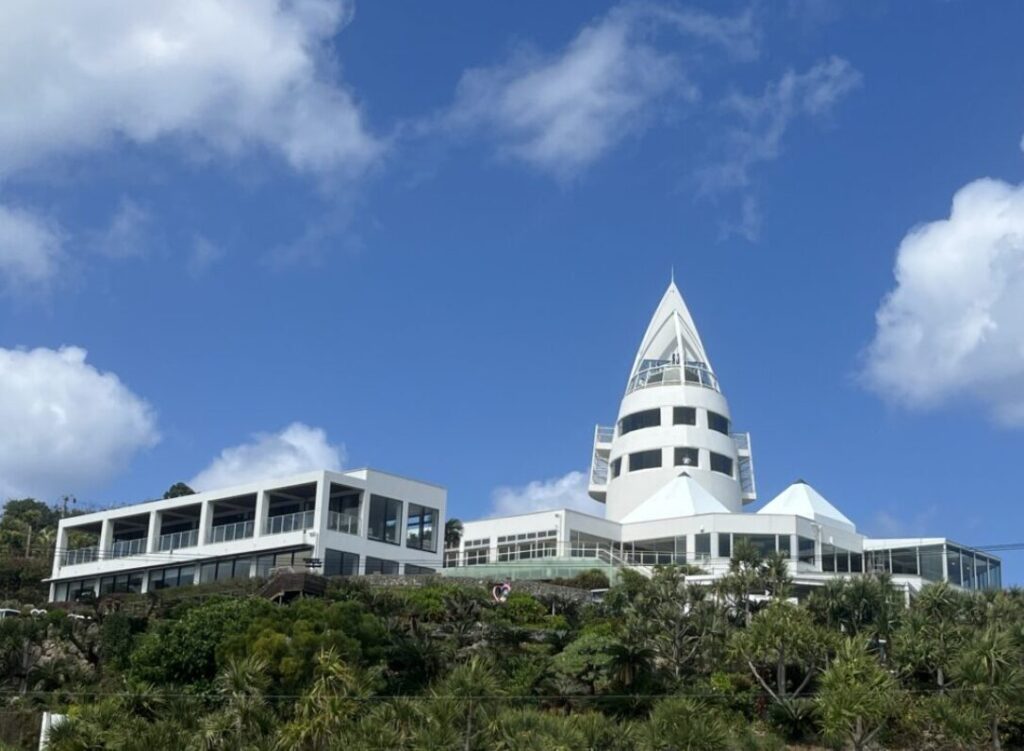
The island’s one paid attraction is Kouri Ocean Tower(古宇利オーシャンタワー), an observation tower on the hill with a shell museum and a restaurant. Admission is 1,000 JPY from the age of 16, 500 JPY for ages 6 to 15, and free below that. It opens 10:00 to 18:00 with last entry at 17:30, has 200 parking spaces, and is open all year except in bad weather.
Whether it is worth the ticket depends on the weather: the view back along the bridge is the point, and on a grey day the same view is free from the roadside.
Half a day covers the island comfortably — cross the bridge, park, swim or walk, eat, see the Heart Rock, and leave. Most people fold it into a day that also takes in the aquarium or Nakijin Castle, which is the right way to do it: Kouri is a stop on a northern Okinawa day, not a destination that fills one.
If you want it quiet, come early. The island is at its best before the coaches arrive and after they have gone.
If you would rather stay on the island than drive back the same day, ResortVilla KAPUKA is a private pool villa on Kouri itself. Otherwise the obvious pairing is the aquarium down the coast, on the same road back.
For the island as a whole, including where to stay in the north, start with our Okinawa travel guide.
No. The 1,960-metre bridge is free to drive and open to walk across, with car parks at either end.
At Sorahashi, the island’s visitor facility, yes — 106 ordinary spaces across two car parks. The car parks at the individual beaches are private and charge per visit, with the rate posted at the entrance.
Yes, at the main beach in season. Okinawa’s tourism service advises against swimming when no lifeguard is on duty, and the smaller coves are unsupervised and tidal, so treat them as places to paddle rather than to swim out from.
Cross the bridge early, park free at the visitor centre, and walk to the water. Kouri rewards the people who are not in a hurry.
Last updated: October 2026. Charges, opening hours and local conditions change, and the official information is published in Japanese. We check each figure against official pages, but please confirm before you travel.
Hida Folk Village, or Hida no Sato, is a fascinating open-ai……
Sanmachi Street, located in the heart of Hida Takayama in Gi……
In November 2022, Ghibli Park opened its doors within the Ai……
When planning a trip to Japan, Gotemba Kogen Tokinosumika in……


