

- 2024-12-26
Discovering Kasuga Taisha Shrine: Nara’s Premier Spiritual Power Spot
Kasuga Taisha Shrine, located in the ancient capital of Nara……
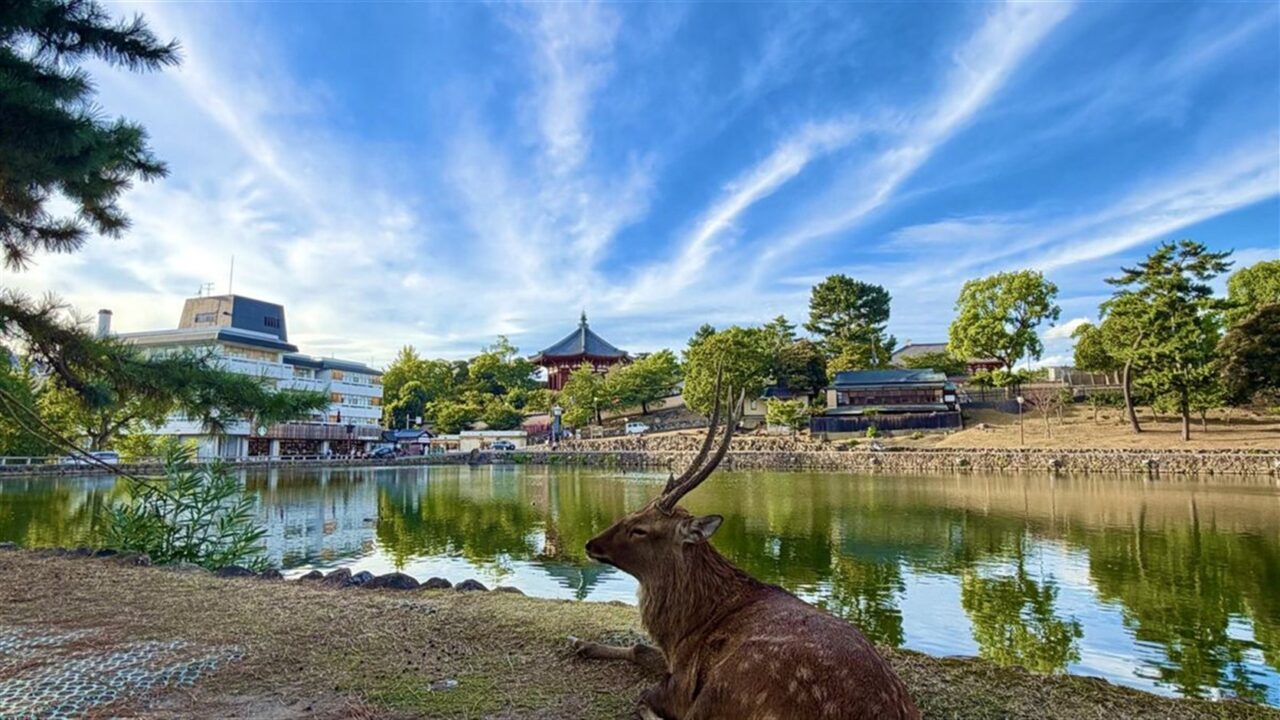
Nara (奈良) is the rare Japanese sight that genuinely works as a half-day trip. The Great Buddha, the deer and two of the country’s oldest shrines sit inside one park, and the whole circuit is walkable from the station — which is why so many people come over from Kyoto or Osaka after breakfast and are back for dinner.
This guide sets out a walking route that fits in four to five hours, what each stop costs, and the two practical things that catch visitors out: Todai-ji takes cash only, and the park closes later than the halls inside it.
| Where | Nara Park(奈良公園), Nara City, 30–45 minutes from Kyoto or Osaka |
| Time needed | Four to five hours for the main circuit on foot |
| Todai-ji Great Buddha Hall | 800 JPY adult, 400 JPY primary school child |
| Opening hours | 7:30–17:30 from April to October; 8:00–17:00 from November to March |
| Payment | Cash only for temple admission |
| Combined ticket | 1,200 JPY for the Great Buddha Hall and the Todai-ji Museum (600 JPY for primary school children) |
| Loop bus | 250 JPY per ride for adults, 130 JPY for primary school children |
| Closed | Todai-ji does not close except for special events or emergencies |
| Official site | Todai-ji, hours and admission |
Start at Kintetsu Nara Station(近鉄奈良駅)if you can. It sits at the edge of the park, while JR Nara Station(JR奈良駅)is a longer walk or a short bus ride west of it. The circuit below runs anticlockwise and ends back where it started.
| Time | Stop | Why |
| 0:00 | Kintetsu Nara Station | Buy deer crackers later, not here |
| 0:10 | Kofuku-ji 興福寺 | The five-storey pagoda and the national treasure hall, on the way in |
| 0:40 | Nara Park 奈良公園 | The deer, and the first place most people lose half an hour |
| 1:20 | Todai-ji 東大寺 | The Great Buddha Hall; allow a full hour with the approach |
| 2:30 | Nigatsu-do 二月堂 | A short climb behind Todai-ji for the view back over the city |
| 3:10 | Kasuga Taisha 春日大社 | Stone lanterns along the forest approach |
| 4:15 | Back to the station | Through the park, or one stop on the loop bus |
If you have only three hours, cut Kasuga Taisha and Nigatsu-do. If you have a full day, the same route plus lunch and the Todai-ji Museum fills it comfortably.
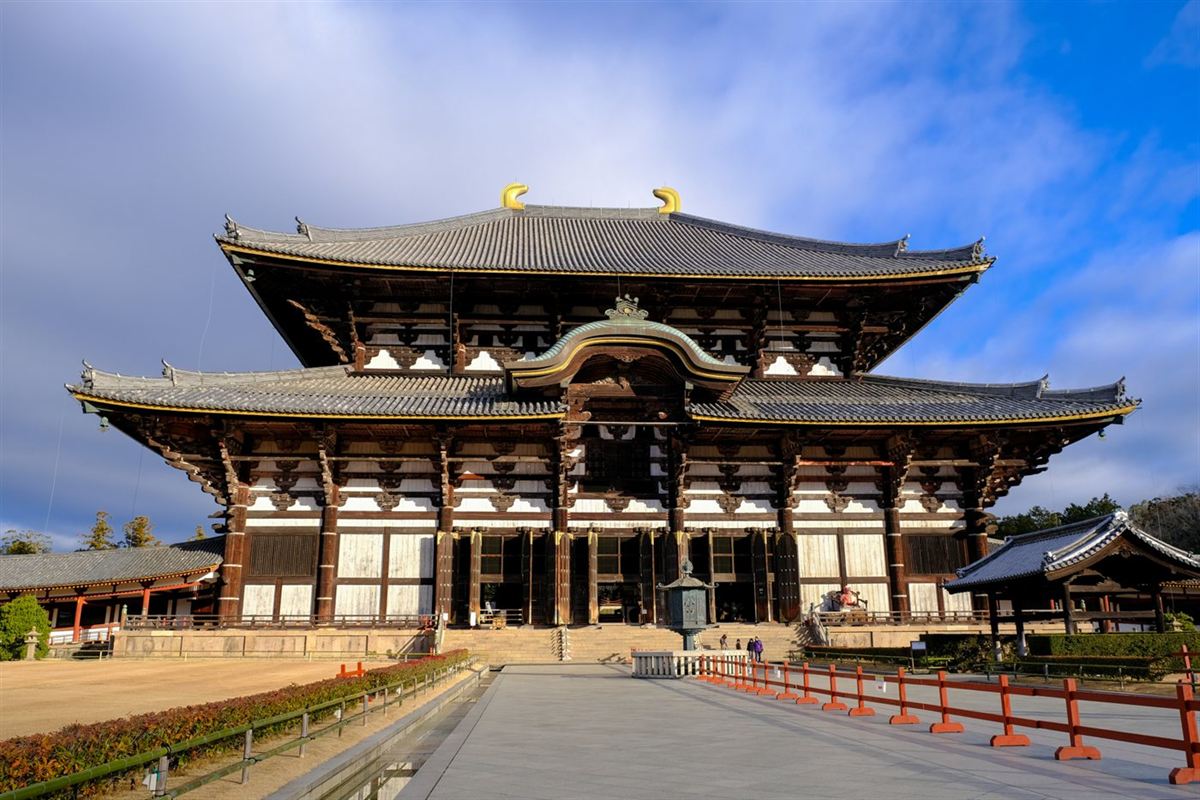
The Great Buddha Hall costs 800 JPY for anyone from junior high school upwards and 400 JPY for primary school children, and admission is paid in cash. That is the single most common stumble for visitors who have been tapping a card since the airport. Bring notes and coins for the day.
A combined ticket covering the Great Buddha Hall and the Todai-ji Museum is 1,200 JPY, or 600 JPY for primary school children, and is sold at either entrance. The Hokke-do(三月堂)and the Kaidan-do(戒壇堂)charge their own admission and keep shorter hours, 8:30 to 16:00, so they close while the Great Buddha Hall is still open. The museum runs 9:30 to 17:30 from April to October and 9:30 to 17:00 in winter, with last entry half an hour before closing.
Within the city, the loop bus is a flat 250 JPY per ride for adults and 130 JPY for primary school children. For the journey in, Kintetsu sells a Nara World Heritage Free Ticket from Kyoto or Osaka-Namba that bundles the return trip with unlimited travel in the Nara area: 1,800 JPY for one day, 2,370 JPY for two days, or 3,530 JPY for a three-day version that reaches Yoshino, with children at roughly half. Limited express surcharges are not included.
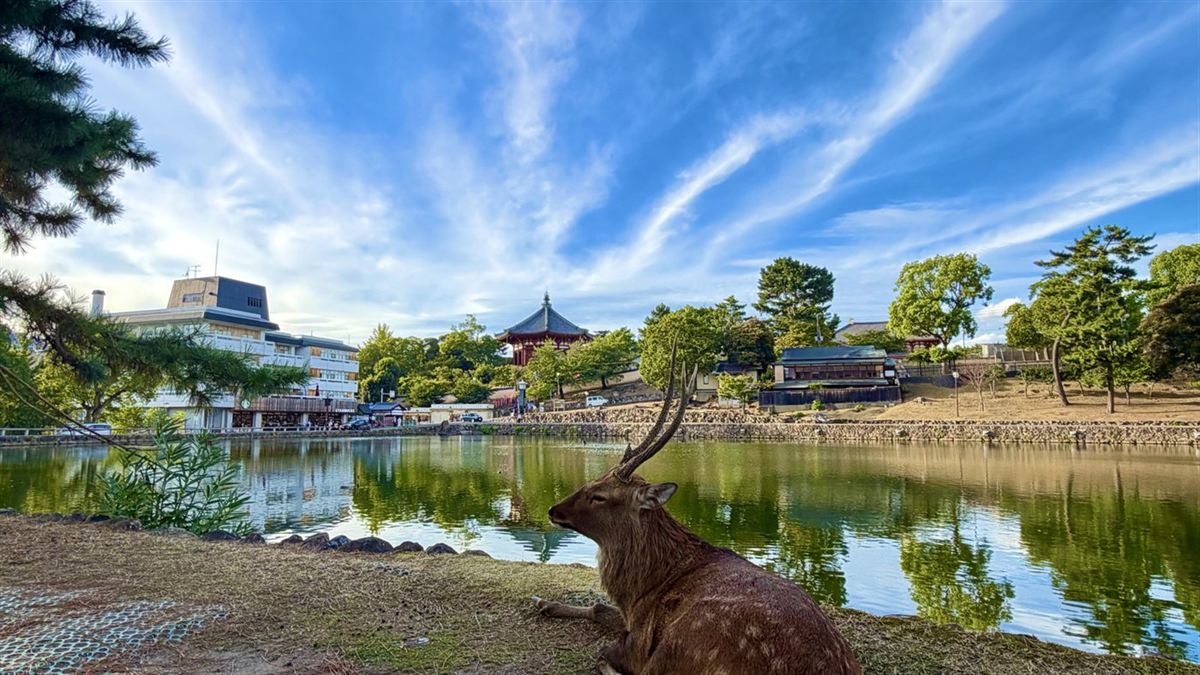
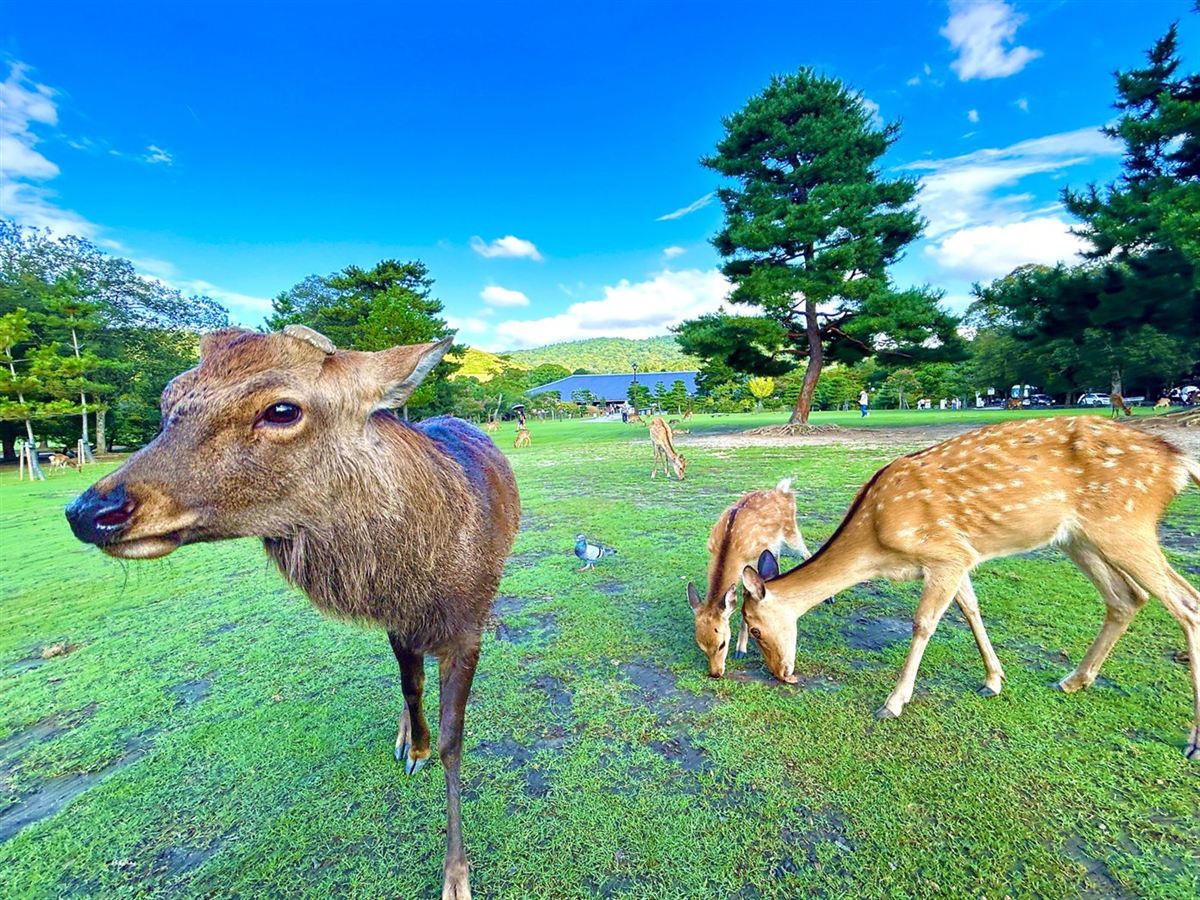
The deer in Nara Park are wild animals that have learned to live beside people, not an attraction with a fence around it. They roam the park and the pavements, and in the places where crackers are sold they gather in numbers.

Each stop on the route has its own guide: Todai-ji Temple for the Great Buddha Hall, Nara Park for the wider grounds, and Kasuga Taisha for the shrine at the end of the forest approach.
For the temples beyond the park — Yakushi-ji, Gango-ji and the Heijo Palace ruins — and for where to stay if you decide a half day is not enough, see our Nara travel guide.
For the park, the Great Buddha and one shrine, yes. Four to five hours covers the circuit above. A full day lets you add the museum, lunch and the temples west of the centre.
No. Admission is cash only, so bring enough yen for the day. The combined ticket with the museum is 1,200 JPY.
Kintetsu Nara Station is closer to the park than JR Nara Station. If you hold a JR pass the JR station still works; add a short walk or one ride on the 250 JPY loop bus.
Plan the day backwards from the closing times rather than from your train: in winter the halls shut at 17:00, and the walk between Todai-ji and Kasuga Taisha is the part most people underestimate.
Last updated: October 2026. Admission fees, hours and ticket prices change, and the official information is published in Japanese. We check each figure against Todai-ji, Kintetsu and the Nara City Tourist Association, but please confirm before you travel.
Kasuga Taisha Shrine, located in the ancient capital of Nara……
Nara Park is free and has no gate, which makes it the connec……
Nara, Japan, is home to many historically significant temple……
The hall shuts at 17:00 in winter, the side halls at 16:00, ……


